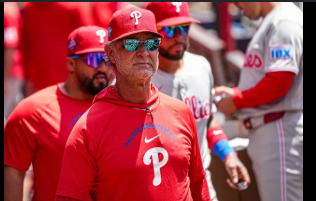
BREAKING: Phillies Coach Pulls Support for Major Team Addition, Sending Shockwaves Across the Nation
PHILADELPHIA — Philadelphia Phillies organization is facing intense scrutiny following reports that manager Rob Thomson played a significant role in halting momentum behind a proposed major roster addition.
The unexpected decision has sparked debate among fans, analysts, former players, and league executives, many of whom believed the Phillies were aggressively pursuing another high-profile addition as they continue their quest for a World Series championship.
While officials within the organization have not publicly commented on the specifics of the reported discussions, sources close to the situation indicate that a potential move involving an established player was under serious consideration before concerns emerged during internal evaluations.
Those concerns reportedly led to a reconsideration of the proposal, creating shockwaves throughout baseball and prompting widespread discussion about the Phillies’ long-term strategy.
A Franchise Focused on Winning
The Phillies have established themselves as one of Major League Baseball’s most aggressive organizations in recent years.
Led by managing partner John Middleton and president of baseball operations Dave Dombrowski, the club has consistently demonstrated a willingness to invest heavily in talent.
That approach has transformed the Phillies into perennial contenders.
The organization boasts a roster filled with star power, including players such as Bryce Harper, Trea Turner, Zack Wheeler, and Kyle Schwarber.
Because of those ambitions, many observers assumed the team would continue pursuing every opportunity to strengthen its roster.
That is why reports suggesting resistance to a major addition have generated such significant attention.
The Unexpected Shift
According to individuals familiar with internal discussions, the proposed acquisition initially appeared to have substantial support within several areas of the organization.
The player under consideration was reportedly viewed as someone capable of contributing immediately while potentially enhancing the club’s postseason outlook.
Yet as evaluations continued, questions reportedly emerged regarding how the addition would fit into the Phillies’ existing structure.
Rather than focusing solely on talent, decision-makers began examining broader issues.
Among the factors reportedly discussed:
- Roster balance.
- Defensive alignment.
- Clubhouse chemistry.
- Playing-time distribution.
- Long-term financial flexibility.
- Development opportunities for younger players.
Sources suggest that Thomson voiced concerns about several of these areas.
While no manager would oppose improving the team’s talent level, those familiar with the situation say Thomson emphasized the importance of ensuring any addition strengthens the entire organization rather than creating unintended complications.
Rob Thomson’s Influence
Since becoming manager, Thomson has earned widespread respect throughout baseball.
Known for his calm demeanor and steady leadership, he has guided the Phillies through multiple postseason runs while maintaining strong relationships with players and executives.
His influence within the organization has grown significantly as a result.
Players frequently praise his communication skills.
Executives value his perspective.
Fans appreciate his ability to keep the clubhouse focused during challenging stretches.
Because of that reputation, any report suggesting Thomson raised concerns regarding a major acquisition naturally attracts attention.
Many insiders believe his input carries considerable weight when discussions involve roster construction and clubhouse dynamics.
That does not mean he makes personnel decisions alone.
However, successful organizations often seek feedback from managers who work closely with players every day.
Balancing Talent and Chemistry
One of the most difficult challenges facing modern baseball organizations involves balancing talent acquisition with team chemistry.
On paper, adding a talented player often appears straightforward.
In reality, the process is considerably more complex.
Every addition affects:
- Lineup construction.
- Defensive positioning.
- Pitching rotations.
- Bench usage.
- Player development pathways.
- Leadership structures.
A move that looks ideal statistically may create unexpected challenges inside the clubhouse.
Conversely, maintaining continuity can sometimes strengthen a team’s overall performance.
The Phillies reportedly considered all of these factors before reassessing the proposed addition.
That broader evaluation process highlights the complexity of modern roster management.
Fans React Across Philadelphia
News of the reported decision spread rapidly throughout Philadelphia.
Reaction among fans was immediate.
Many supporters expressed surprise that the organization might hesitate to add another established player.
Given the competitive nature of the National League, some argued that championship contenders should pursue every possible advantage.
Others supported the reported decision.
They pointed to the Phillies’ recent success and argued that disrupting an already strong clubhouse carries risks.
Social media platforms quickly filled with debates.
Sports radio hosts dedicated extensive coverage to the topic.
Questions emerged throughout the city:
- Was the proposed player worth the cost?
- Would the move have improved the roster significantly?
- Did chemistry concerns play a larger role than expected?
- Could another opportunity emerge in the near future?
The uncertainty surrounding the situation only fueled additional speculation.
A Clubhouse Built on Trust
One reason the story has generated such interest is the reputation of the Phillies’ clubhouse.
Over the past several seasons, team leaders have helped create a culture centered on accountability, preparation, and trust.
Veterans such as Bryce Harper and Kyle Schwarber have played key roles in establishing that environment.
Younger players have embraced those standards.
Coaches and staff members have worked to maintain consistency.
Many observers believe preserving that culture remains one of the organization’s top priorities.
As a result, any decision involving a major roster addition naturally prompts discussions about how a new player would fit within the existing group.
According to reports, that issue may have been one of several factors considered during internal conversations.
The Championship Window
The Phillies understand that opportunities to win championships do not last forever.
Several core players are either in or approaching the prime years of their careers.
That reality places enormous pressure on every decision.
Management must constantly balance immediate needs against future considerations.
Adding talent can increase championship odds.
Maintaining flexibility can protect long-term competitiveness.
Finding the correct balance remains one of the most difficult tasks facing any front office.
The reported decision reflects the complexity of that challenge.
Rather than acting impulsively, the Phillies appear to have taken a comprehensive approach to evaluating the proposed addition.
League-Wide Attention
The story has attracted attention far beyond Philadelphia.
Executives throughout baseball are closely monitoring developments.
Many see the situation as an example of how modern organizations operate.
Gone are the days when personnel decisions were made exclusively by one individual.
Today’s successful franchises rely on collaboration.
Input often comes from:
- Front-office executives.
- Analytics departments.
- Scouting personnel.
- Coaching staffs.
- Player-development specialists.
Reports suggest the Phillies followed that collaborative model during discussions surrounding the proposed addition.
The resulting decision demonstrates how multiple perspectives can influence organizational strategy.
What Happens Next?
Despite reports that support for the addition weakened, few believe the Phillies are finished exploring ways to improve their roster.
Contending teams constantly evaluate opportunities.
Potential areas of focus could include:
- Bullpen reinforcements.
- Bench depth.
- Starting pitching insurance.
- Defensive upgrades.
- Additional offensive production.
Industry insiders expect the Phillies to remain active in monitoring the market.
The organization’s commitment to winning remains unchanged.
If the right opportunity emerges, few would be surprised to see the club act aggressively.
However, recent events suggest that leadership will carefully evaluate every option before making a move.
Why This Story Matters
At first glance, a team declining to pursue a player might seem unremarkable.
Yet the reaction to this situation reveals something deeper.
Fans expect contenders to chase every available star.
Executives understand that championships require more than talent alone.
Successful organizations must also consider:
- Fit.
- Timing.
- Leadership.
- Development.
- Culture.
The reported decision illustrates how those factors increasingly influence roster construction.
It also highlights the growing importance of managerial input in modern baseball operations.
Looking Toward the Future
As the season progresses, attention will remain focused on Philadelphia.
Every roster move will be analyzed through the lens of this reported decision.
If the Phillies continue winning, supporters may view the choice as evidence of disciplined leadership.

If struggles emerge, critics may question whether the organization missed an opportunity to improve.
Such scrutiny comes with competing in a major market and pursuing championship aspirations.
For Thomson and the Phillies, however, the focus remains unchanged.
The goal is simple:
Build the strongest possible team.
Whether that involves making a major acquisition or maintaining confidence in the current roster, leadership appears determined to prioritize what it believes is best for the organization as a whole.
Conclusion
The reported decision by Phillies manager Rob Thomson to pull support for a major team addition has become one of the most intriguing stories in baseball. Though many details remain private, the development has generated widespread discussion about roster construction, leadership influence, clubhouse culture, and championship strategy.
In an era where every move is analyzed and every rumor becomes a headline, the Phillies have once again found themselves at the center of the baseball world. Whether this decision ultimately proves wise or controversial will be determined over time, but one thing is certain: the organization’s approach has captured the attention of fans and observers across the nation.
For now, Philadelphia waits, watches, and wonders what the next chapter in the Phillies’ pursuit of a championship will bring.
Leave a Reply