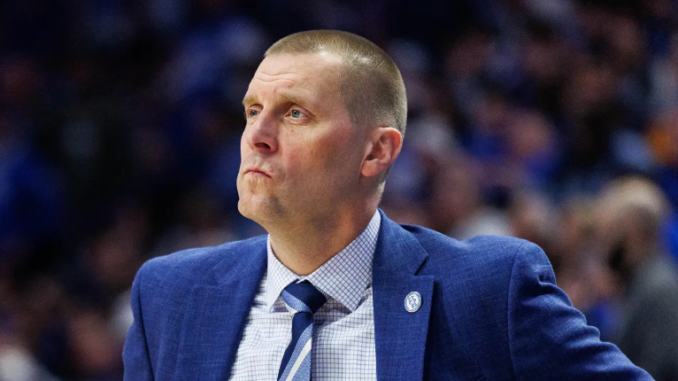
Kentucky’s Mark Pope Decision Backfires as Season Takes a Stunning Turn for the Worse
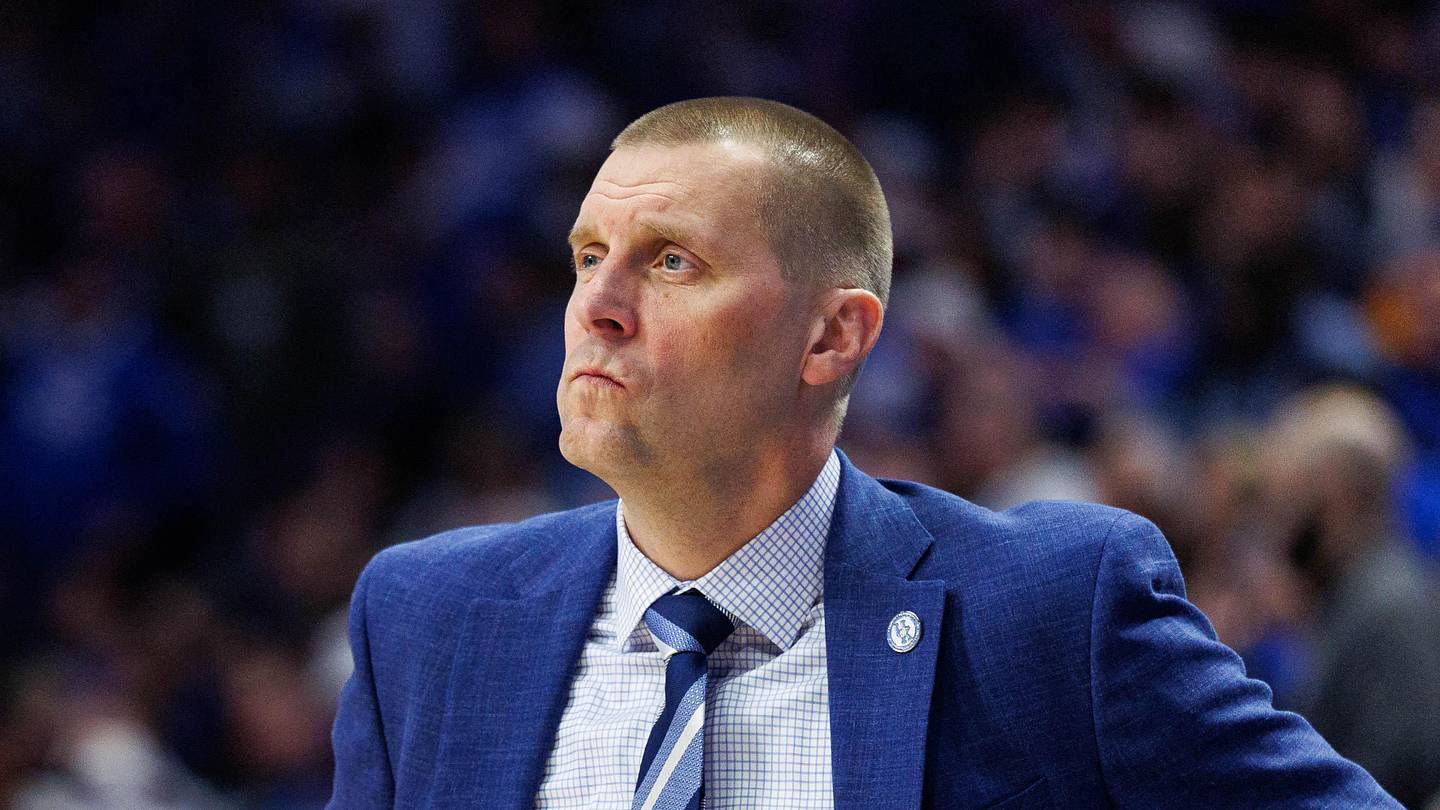
LEXINGTON, Ky. A major storyline is beginning to surround Kentucky basketball as head coach Mark Pope enters one of the most important stretches of his tenure in Lexington.
After a disappointing 2025–26 campaign, the Wildcats are heading into the 2026–27 season with expectations once again extremely high. Kentucky finished last season 22–14, reached the NCAA Tournament and advanced to the second round, but the result left plenty of questions about whether Pope’s roster-building strategy can deliver the deep postseason run Kentucky fans expect.

Now, one of Pope’s offseason decisions is facing renewed scrutiny.
Pope’s gamble comes under the spotlight
Pope has taken an unconventional approach to roster construction, relying on a combination of transfers, young talent and a multi-person front-office structure rather than placing all personnel responsibilities on a traditional general manager.
Pope has defended that system, arguing that Kentucky benefits from having specialists handling different areas of roster construction, NIL, legal matters and strategy.
But that approach comes with enormous pressure.
Kentucky is not a program where simply reaching the NCAA Tournament is enough. The Wildcats are expected to compete for championships, and the pressure on Pope has increased entering Year 3.
Some observers have already described the upcoming season as a critical one for the coach.
The biggest concern: physicality
Ironically, Pope himself has identified an area that could become a major problem.
The Kentucky coach recently acknowledged concerns about the Wildcats’ lack of physical size compared with some of the nation’s bigger teams. He believes his roster has skill, speed and athleticism, but acknowledged that physical opponents could create difficult matchups.

That admission has generated plenty of discussion among Kentucky supporters.
The Wildcats appear to be betting heavily on versatility, athleticism and offensive firepower rather than simply matching opponents with size.
That could work brilliantly.
But if it doesn’t, critics will inevitably return to the question: Did Pope make the wrong roster-building decision?
Recruiting misses add to the pressure
Kentucky also experienced several significant recruiting disappointments during the offseason.
One of the biggest came when highly regarded 2026 prospect Tyran Stokes chose Kansas rather than Kentucky. That decision was viewed as a particularly painful recruiting miss because Kentucky had invested heavily in the pursuit.
The Wildcats also missed out on transfer guard Rob Wright III, who ultimately chose BYU. That decision was followed by questions about whether Kentucky had lost additional opportunities in the transfer portal.
Those misses don’t automatically mean Pope’s strategy has failed.
However, they increase the pressure for the players Kentucky ultimately brought to Lexington to produce.
A new-look Kentucky team
There are reasons for optimism.
Pope has been particularly enthusiastic about Kentucky’s backcourt, highlighting the talent and potential of players such as Zoom Diallo and Alex Wilkins.
The summer has also provided encouraging signs.
Kentucky’s August 6 open practice generated positive reactions from fans, with players such as Milan Momcilovic, Zoom Diallo, Mason Williams and Franck Kepnang receiving attention.
That means the story is far from simply being one of failure.
In fact, Kentucky could still prove that Pope’s controversial roster philosophy was exactly the right decision.
Why fans are nervous
The concern is not necessarily about whether Kentucky can win games.
It’s about whether this particular roster can survive the most physical environments of college basketball.
If Kentucky’s guards consistently control games, the Wildcats’ speed and offensive versatility could make them extremely dangerous.
But if opponents successfully slow Kentucky down and force the Wildcats into physical half-court battles, Pope’s concerns about size could become a major storyline.
That is where the offseason gamble will ultimately be judged.
The pressure is now on Pope
Pope inherited one of college basketball’s most demanding jobs when he returned to Lexington in 2024.
His connection to Kentucky is obvious. He was part of the 1996 national championship team and understands what the program means to its supporters.
But sentiment cannot protect a coach forever.
Results matter.
After last season’s 22–14 finish and second-round NCAA Tournament exit, expectations for 2026–27 are considerably higher.
Pope now has to prove that his roster construction can translate into postseason success.
One decision could define the season
That is why the current storyline feels so significant.
If Kentucky explodes out of the gate, Pope’s critics will quickly disappear.
If the Wildcats struggle against bigger and more physical opponents, however, every offseason decision will be examined again.
The roster could either become evidence that Pope’s unconventional strategy works—or the reason critics argue that Kentucky should have taken a different approach.
For now, there is no definitive evidence that the decision has actually “backfired.” The 2026–27 season has not yet played out.
But the warning signs have created a fascinating storyline entering the new campaign.
Mark Pope has made his bet.
Now Kentucky fans are waiting to see whether that bet produces a championship contender or another season of frustration.
And with expectations in Lexington as high as ever, there may be very little room for another disappointing ending.
Leave a Reply